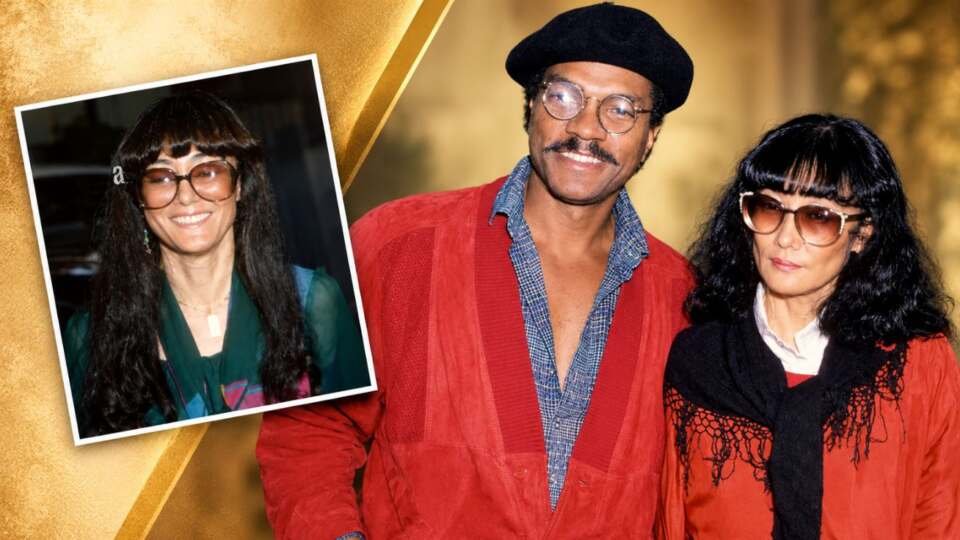
Long before she became the longtime wife of Star Wars icon Billy Dee Williams, Teruko Nakagami was already part of American music history, gazing out in cobalt blue from the cover of Wayne Shorter’s 1966 Blue Note masterpiece, Speak No Evil. That single portrait, taken years before the album reached stores, still introduces her to new listeners today.
Raised in Chicago in a Japanese-American family with a twin sister, she married Shorter in 1961, became a mother in 1962, and later wed Williams in Tokyo on December 27, 1972. Her life connects post-war resettlement, golden-era jazz, and a Hollywood marriage that has lasted more than five decades and weathered a separation during the 1990s.
Quick Facts
| Field | Details |
|---|---|
| Full Name | Teruko Irene Nakagami |
| Born | 1946, Chicago, Illinois |
| Heritage | Japanese-American |
| Twin Sister | Yes, she grew up with a twin sister in Chicago |
| Height | 5 feet 5 inches (165 cm) |
| First Spouse | Wayne Shorter (married July 28, 1961, ended 1964) |
| Spouse | Billy Dee Williams (married December 27, 1972) |
| Wedding Location | Tokyo, Japan |
| Notable Credit | Cover subject on Speak No Evil (1966) |
| Children | Miyako Shorter and Hanako Williams |
| Grandchildren | Lucie Katsumi and Finnegan Ichiro |
| Residence | Studio City, Los Angeles, California |
Early Life and Japanese-American Roots
Teruko Irene Nakagami was born in Chicago, Illinois, and is listed in most profiles with a 1946 birth year, growing up as part of the city’s Japanese-American community alongside a twin sister. Chicago mattered in that era because thousands of Japanese-American families rebuilt their lives there after the war years disrupted communities along the West Coast.
Her upbringing joined American schooling and city life with Japanese family traditions. That dual background later placed her between very different worlds, from Wayne Shorter’s jazz circle in the early 1960s to Hollywood in the 1970s, without her seeking attention in either one.
The Internment Timeline Explained
Many circulating profiles combine two claims that cannot both be correct: a 1946 Chicago birth and entry into a California internment camp at age six, which would place that experience in 1952. United States internment camps operated from 1942 to March 1946, with Tule Lake, the last camp, closing on March 20, 1946, so a child born in 1946 could not have entered one at six.
The more reliable context is Chicago’s role as a major resettlement center, where Japanese-American families arrived after the 1945 to 1946 camp closures. Whether the camp experience belonged to Teruko herself at an earlier birth year or to her family’s wartime history before settling in Chicago, separating the documented timeline from copied errors gives an honest account.
First Marriage to Wayne Shorter
Teruko married jazz saxophonist and composer Wayne Shorter on July 28, 1961, at the start of a decisive period in his career with Art Blakey’s Jazz Messengers. Their daughter Miyako was born in 1962, and Shorter wrote with a young family at home while his reputation as a composer grew through albums recorded for Blue Note Records in New York.
The marriage ended in 1964, the same year Shorter left the Jazz Messengers to join Miles Davis’s Second Great Quintet alongside Herbie Hancock, Ron Carter, and Tony Williams. That timing matters, because the album most associated with her image did not reach record stores until two years after the couple had separated.
A Face on a Jazz Classic
Speak No Evil was recorded on Christmas Eve, December 24, 1964, at Rudy Van Gelder’s studio and released by Blue Note in June 1966 as catalog BLP 4194 / BST 84194. Cover designer Reid Miles used a cropped, cobalt-blue photograph of Teruko, and Shorter later described her look on that sleeve as resembling a Japanese Audrey Hepburn, a comparison jazz fans still repeat.
By the 1966 release, Teruko was Shorter’s former wife, not his current partner, a distinction many summaries miss. The album also carries family traces in its music, including Infant Eyes, which Shorter wrote after looking into newborn Miyako’s eyes, and the track Miyako, named directly for their daughter.
Marriage to Billy Dee Williams
Teruko married Billy Dee Williams on December 27, 1972, in a private ceremony in Tokyo, Japan, during the year his performance in Lady Sings the Blues made him a leading man. She became his third wife, following his marriages to Audrey Sellers (1959 to 1963) and Marlene Clark (1968 to 1971), and the Tokyo setting placed her heritage at the center of their wedding day.
Williams explained it himself in 1980, saying: “My wife is fantastic. She is principled and moral, with this thing the Japanese have about honor. She forces me to deal with things. Otherwise I’d be running around like a crazy person. I need somebody to sit on me and calm me down.” The quote captures the grounding role he credited her with.
Motherhood and a Blended Family
The family Teruko and Williams built joined children from three chapters of their lives in one household. Corey Dee Williams, born in 1960 to Williams and Audrey Sellers, became her stepson, while Miyako, born in 1962, connected the household to her first marriage, and Hanako Williams followed in 1973, eleven years after her older sister was born in the jazz years.
Hanako built her career in the Los Angeles art gallery world and married Liam Toohey, extending the family’s ties into the city’s visual arts community. The eleven-year gap between Miyako and Hanako meant Teruko mothered in two distinct eras, first during the recording years of 1960s jazz and later as the wife of a film star.
The 1993 Separation and Reconciliation
In 1993, after two decades of marriage, Billy Dee Williams filed for an amicable divorce, and the couple lived apart for a period while the filing remained unresolved. The split drew attention precisely because their union had outlasted most Hollywood marriages around them, yet both handled the separation without public accusations or a contested court fight playing out in the press.
The divorce was never finalized, and by 1997 Teruko and Williams were living together again as husband and wife, where they have remained ever since. Their reconciliation is now part of the marriage’s record, marking four years apart inside a partnership that has continued for more than fifty years in total.
Grandmotherhood and Passing On Her Heritage
Through Hanako and Liam Toohey, Teruko became a grandmother to Lucie and Finnegan, adding a third generation to the Los Angeles family story she had built over decades. Grandmotherhood arrived long after her own daughters were born, giving her a family that spans from Corey, born in 1960, through to grandchildren growing up in a very different California from the one she first knew.
Family gatherings now link gallery work, film history, and jazz heritage around one table, with Hanako’s art career and Miyako’s place in Shorter’s compositions both part of what the younger generation inherits. Teruko’s role at the center of that extended family reflects the priority she maintained through each marriage and each move.
Homes, Lifestyle and Finances in California
In 1984, Teruko and Williams bought a Zen-like contemporary home in Trousdale Estates, Beverly Hills, for about $553,000, and they kept the house for nearly three decades before selling it in 2012 for $2.79 million. The couple later settled in Studio City, Los Angeles, trading a high-profile Beverly Hills address for a neighborhood closer to family and to Hanako’s gallery circle.
At 5 feet 5 inches (165 cm), with dark brown eyes and black hair, Teruko has kept a low commercial profile, and published media estimates place her personal net worth around $1 million and Williams’s around $9 million from his film career. Those figures are estimates rather than disclosed financial records, and their spending has centered on homes and family.
A Deliberately Private Public Life
Teruko has never run a personal social media presence or pursued standalone publicity, so her public record comes from appearances beside Williams at moments that mattered to his career. Those include the Lady Sings the Blues era of 1972, events around The Empire Strikes Back (1980) and Return of the Jedi (1983), and later Star Wars celebrations where fans honored his work as Lando Calrissian.
Away from film events, she has joined Los Angeles gallery occasions connected to Hanako’s work, keeping her outings tied to family rather than promotion. Photographers have captured the couple at tributes, retrospectives, and anniversaries while Teruko leaves interviews and public statements almost entirely to her husband.
Interesting Facts About Teruko Nakagami
- Wayne Shorter copyrighted many compositions through Miyako Music, a publishing name taken from the daughter he shared with Teruko.
- Williams picked up the Japanese phrase bachi atari, meaning what goes around comes around, during his marriage to Teruko and used it in interviews.
- The couple’s former Trousdale Estates house was later remodeled and came back on the market at close to $13 million in 2018, years after they sold it.
- A small red lips imprint sits above the title lettering on the Speak No Evil sleeve, a detail collectors look for on original Blue Note pressings.
- Her grandchildren’s middle names, Katsumi for Lucie and Ichiro for Finnegan, carry Japanese naming into the family’s third generation in Los Angeles.
Conclusion
Teruko Nakagami’s footprint runs from a 1964 Blue Note recording session to a Hollywood marriage that began in Tokyo in 1972 and continues today, connecting her to two defining American art forms. Few spouses of major stars can point to a jazz album cover studied by collectors worldwide and a fifty-year partnership documented in their husband’s own words from 1980 onward.
That combination, rather than celebrity exposure, is what gives her biography its weight for readers tracing Japanese-American resettlement, Wayne Shorter’s early family years, or Billy Dee Williams’s life off screen. Her name endures in record collections, family photographs, and film histories after six decades at the intersection of all three.
FAQs
Is Teruko Nakagami still married to Billy Dee Williams?
Yes. Teruko Nakagami and Billy Dee Williams, married in Tokyo in 1972, remain together after reconciling in 1997 and live in Los Angeles.
Did Teruko Nakagami and Billy Dee Williams ever divorce?
Williams filed for divorce in 1993, but it was never finalized, and the couple were living together again by 1997 in California.
Which album cover is Teruko Nakagami on?
She appears in cobalt blue on Wayne Shorter’s Speak No Evil, recorded in 1964 and released by Blue Note in 1966, catalog BLP 4194.
Who was Teruko Nakagami’s first husband?
Her first husband was jazz saxophonist Wayne Shorter, whom she married on July 28, 1961, and their marriage ended in 1964.
How many children does Teruko Nakagami have?
She has two daughters, Miyako Shorter, born in 1962, and Hanako Williams, born in 1973, plus stepson Corey Dee Williams.